
High School Programs in Ontario: IB, AP & How to Choose the Right Path
Choosing the right high school program in Ontario can be an important decision for students and parents. Ontario schools offer a range of pathways, including regular academic programs, International Baccalaureate (IB), Advanced Placement (AP), Specialist High Skills Major (SHSM), arts, technology, French-language programs and skilled-trades pathways.
This guide explains the different types of high school programs. It compares their benefits. It helps you choose the right option based on your goals.
Ontario’s high school graduation requirements and TDSB specialized-program admissions processes have changed in recent years. This guide has been updated for the 2026–27 school year, but program availability, application dates, admission requirements and fees can vary by school. Always confirm current details with the Ontario Ministry of Education, TDSB and the individual school before applying.
- Last reviewed: August 2026
- Next review: Before the 2027–28 application cycle
Types of High School Programs in Ontario
International Baccalaureate (IB)
The IB program is globally recognized as an academic program. It is designed to develop critical thinking and research skills. The program also builds a strong academic foundation.
Best for:
- Students planning to attend university
- Those seeking an internationally recognized curriculum
Advanced Placement (AP)
AP programs allow students to take college-level courses while still in high school.
Best for:
- Students who want flexibility
- AP allows students to take university-level coursework and demonstrate their achievement through AP examinations. Some universities may grant credit or advanced placement depending on their policies.
Specialized High Skills Major (SHSM)
SHSM is a specialized program that allows students to complete their OSSD while focusing on a specific economic sector. It combines sector-focused courses with experiential learning, certifications and other required components.
Best for:
- Students interested in hands-on experience
- Those exploring career pathways early
Comparison of High School Programs
| Program | Focus | Best For |
|---|---|---|
| IB (International Baccalaureate) | Academic depth & global recognition | University-bound students |
| AP (Advanced Placement) | Flexible subject-based learning | Students wanting advanced courses |
| SHSM (Specialized High Skills Major) | Career-focused training | Students exploring trades or careers |
IB Program Fees in Ontario (2026 Update)
In Ontario, IB programs are offered through public school boards. The Toronto District School Board (TDSB) may include additional program fees.
Fees associated with IB programs can vary by school, program and the specific services or examinations involved. Students and parents should check the current fee information directly with the IB school before applying.
Typical Fee Structure:
- Approximate total fee: $3,000 – $3,500
- Paid across Grades 9 to 12
- Covers program administration, materials, and exams
👉 Some schools may offer financial assistance or payment plans.
How to Choose the Right High School Program
Selecting the right program depends on several key factors:
✔ Academic Goals
- University → IB or AP
- Career-focused → SHSM
✔ Learning Style
- Prefer structured, rigorous learning → IB
- Prefer flexibility → AP
- Prefer hands-on learning → SHSM
✔ Interests and Strengths
Choose a program that aligns with your interests and long-term goals.
✔ Financial Considerations
Some programs (like IB) may involve additional fees, so it’s important to consider affordability.
Example Scenario
A student interested in engineering may benefit from an IB or AP program. These programs offer strong math and science courses. On the other hand, a student interested in trades may find SHSM more suitable.
Quick Summary
- IB offers global recognition and academic depth
- AP provides flexibility and advanced courses
- SHSM focuses on career skills
- Choose based on goals, interests, and learning style
For more details or to apply for assistance, contact your TDSB IB school’s office or visit the TDSB page.
Frequently Asked Questions (FAQs)
What is the best high school program in Ontario?
There is no single best program. IB may be a good fit for students who enjoy a rigorous, academically broad program and are interested in its internationally oriented curriculum; AP offers flexibility; and SHSM is best for career-focused learning.
Different programs are designed to meet different goals, such as:
- Preparing for university
- Developing technical or vocational skills
- Providing international education opportunities
Is the IB program worth the cost?
IB can be valuable for students aiming for competitive universities due to its rigorous curriculum and global recognition.
What is the difference between IB and AP?
IB is a structured, comprehensive program, while AP allows students to choose individual advanced courses.
How to Choose the Right High School Program
Selecting the right program requires careful evaluation. Consider the following factors:
✔ Academic Goals
Do you plan to attend university, college, or enter the workforce directly?
✔ Interests and Strengths
Choose subjects that align with your natural abilities and interests.
✔ Career Plans
Consider your long-term career goals and select a program that aligns with them.
✔ Learning Style
Some students perform better in theoretical environments, while others prefer practical, hands-on learning.
Benefits of Choosing the Right Program
Selecting the right high school program can:
- Improve academic performance
- Increase confidence and motivation
- Open better career and university opportunities
- Reduce stress and confusion about future plans
Common Mistakes Students Should Avoid
- Choosing a program based only on friends’ decisions
- Ignoring personal strengths and interests
- Not researching future career requirements
- Selecting a program without understanding its difficulty level
Final Thoughts
A high school program is more than just a set of subjects—it is a pathway that shapes your future. Take time to evaluate your goals, explore your options, and make an informed decision.
Choosing the right program early can set a strong foundation for academic success and career growth.
School systems in Ontario
Types of schools
- Public schools: Non‑religious, open to all students, adhering to the Ontario curriculum set by the Ministry of Education.
- Catholic schools: Publicly funded but faith-based. They integrate Catholic teaching with the Ontario curriculum. They are part of separate Catholic school boards.
- French‑language schools: Offer instruction primarily in French and serve students with the right to French‑language education, both public and Catholic.
High school structure and OSSD
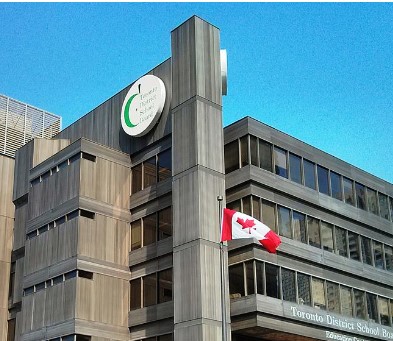
To earn an Ontario Secondary School Diploma (OSSD), a student must finish 30 high school credits. They must finish at least 40 hours of community involvement. Students must meet the provincial literacy condition, typically by passing the OSSLT or the OSSLC course. Additionally, they must earn at least two online learning credits. The mix of compulsory and optional credits varies slightly for students. For students entering Grade 9 in 2024–25 or later
To earn an OSSD, students must:
- 30 credits (Grade 9 in 2023 or earlier: 18 compulsory + 12 optional; Grade 9 in 2024 or later: 17 compulsory + 13 optional)
- 40+ hours of community involvement
- Literacy requirement (OSSLT test or OSSLC course)
- 2 online learning credits (opt-out possible)
- Financial Literacy Graduation Requirement: Starting in the 2026–27 school year, students who are subject to this requirement must successfully complete the financial literacy modules in the Grade 10 Career Studies course. Students must achieve a mark of at least 70% and have two attempts to meet the requirement.
For the most current official details, see the Ontario government page on earning your Ontario high school diploma.
Compulsory Credits (total of 17)
| Credits Point | Grade(s) |
|---|---|
| 4 credits in English | 1 credit per Grade (9 – 12) |
| 3 credits in Mathematics | Grade 9, 10, and at least one in Grade 11 or 12 |
| 2 credits in Science | |
| 1 credit in the Arts (dance, drama, media, music, visual arts) | |
| 1 credit in Canadian Geography | Grade 9 |
| 1 credit in Canadian History | Grade 10 |
| 1 credit in French as a second language | |
| 1 credit in Health and Physical Education | |
| 0.5 credit in Career Studies | |
| 0.5 credit in Civics and Citizenship | |
| 1 credit in Technological Education | Grade 9 or 10 |
| 1 credit from a STEM-related course group (business studies, computer studies, cooperative education, an extra math, science, or technological education course) |
Programs and pathways
- Boards like the TDSB offer a wide range of pathways: regular programs, specialized programs (e.g., arts, STEM, technology, Afrocentric), co‑op, OYAP apprenticeships, night school, and summer and e-learning options.
- Many Ontario high schools offer enrichment options such as the IB, AP, and local specialty programs. Nonetheless, these programs all still lead to the same OSSD framework.
Toronto District School Board’s (TDSB) specialized secondary programs
Here is a consolidated table of TDSB’s specialized secondary programs. This table is based on the most recent available information from official TDSB sources. It also includes guidance documents.
For the 2026–27 school year and upcoming 2027–28 admissions cycle, program availability and admission requirements may change. Confirm current details with TDSB and the individual school before applying.
| Program Name | Description | Sample Courses/Focus | Schools offering the program | Admission Requirements |
|---|---|---|---|---|
| International Baccalaureate (IB) | A rigorous, internationally recognized educational programme that emphasizes academic breadth, depth, critical thinking, research and international-mindedness. | IB English, IB Math, IB Biology | Sir Wilfrid Laurier CI, Parkdale CI, Victoria Park CI, Weston CI, Monarch Park CI | The IB Diploma Programme is a rigorous two-year programme normally completed in Grades 11 and 12. Admission procedures and eligibility vary by school. Students should check the requirements and application process for their individual TDSB school. |
| Specialist High Skills Major (SHSM) | Sector-focused program (Arts, Business, Health, ICT, Trades, etc.), includes certifications and co-op | Sector-specific bundle, Co-op | Central Technical, Danforth CTI, Western Tech, Georges Vanier SS, Marc Garneau CI, SATEC @ WA Porter CI | Application, interest in the sector, need an interview |
| MaCS (Math & Computer Science) | Enriched math, science, computer tech, and English for high-achieving students | Enriched Math, Science, Comp Sci, English | William Lyon Mackenzie CI | Entrance exam, application, and academic record |
| TOPS (Talented Offerings in the Sciences) | Advanced science and math program with an enriched curriculum | Advanced Math, Science, English | Marc Garneau CI, Bloor CI | Entrance exam, application, and academic record |
| SATEC @ WA Porter CI | Scarborough Academy for Technological, Environmental & Computer Education | Technology, Math, Science, ICT | SATEC @ WA Porter CI | Entrance exam (Math/Science), application |
| STEM+ | Math and science with a global/social justice perspective | Math, Science, Social Justice | George Vanier CI | Entrance exam (Math/Science), application |
| Enriched Programs (various) | In-depth focus on math, science, or technology for advanced learners | Enriched Math, Science | CW Jefferys CI, Danforth CTI, John Polanyi CI, Northview Heights SS, Runnymede CI, West Humber CI | Application, entrance exam (varies), academic record |
| Afrocentric Secondary Program | Curriculum delivered through an Afrocentric lens, reflecting diverse histories and perspectives | Afrocentric History, English, Social Sci | Downsview Secondary School | Application, interest in the Afrocentric curriculum |
| Arts Focused Schools/Programs | Intensive arts curriculum in music, visual arts, drama, dance, and media | Visual Arts, Music, Drama, Dance | Etobicoke School of the Arts, Rosedale Heights School of the Arts, Wexford Collegiate School for the Arts | Audition/portfolio, application, interview |
| Entrepreneurship | Program developing business innovation, flexibility, and self-reliance | Business, Marketing, Entrepreneurship | Various schools | Application, interest in business |
| Center of Innovation for Skills & Tech (CIST) | STEM-focused learning hubs with engineering design and real-world applications | STEM, Engineering, Design | Various schools | Application, interest in STEM |
| Ontario Youth Apprenticeship Program (OYAP) | Start apprenticeship training in skilled trades while earning high school credits. | Co-op, Construction, Automotive | Central Technical, Danforth CTI, Western Tech | Application, interest in trades, may need an interview |
| Dual Credit Programs | Earn both high school and college credits through partnerships | College-level courses | Various schools in collaboration with colleges | Application, teacher recommendation, and academic standing |
| Alternative Schools | Schools with unique teaching philosophies and flexible environments | Varies by school | City School, Oasis Alternative, Subway Academy I & II | Registration is suitable for self-motivated learners |
| Remote Learning/e-Learning | Online courses and virtual learning for digital skills and flexibility | Online English, Math, Science | All TDSB secondary schools | Application, suitable for students seeking a different path |
| School Within a College | Finish high school credits in a college setting, easing transition to post-secondary education. | College transition courses | In partnership with local colleges | Application, suitable for students seeking a different path |
| Continuing Education | Night school, summer school, adult education, international languages, and general interest | Night school Math, Adult ESL | Various TDSB sites | Registration: some programs may require proof of residency |
| French Programs (Extended/Immersion) | French Immersion or Extended French for advanced French language skills. | French Language, Social Studies | Various schools | Application, prior French study (varies by entry point) |
| Special Education and Inclusion Programs | Intensive support and inclusion for students with special needs | Individualized curriculum | Various schools | Identification and placement process |
Notes:
- This list covers the major TDSB specialized programs but does not include every niche or school-specific offering. Some programs are only available at select schools.
- Admission requirements vary by program and school and include applications, entrance exams, interviews, auditions, or portfolios.
- For the most current and comprehensive details, visit the [TDSB Specialized Programs page] or individual school websites.
You may also find it helpful to read our guide on NRI financial rules and travel limits for better planning.

